
Trend and assortment intelligence for fashion brands, with AI agents
Enstyle helps designers, merchandisers and planners make better assortment decisions by validating trend signals using consumer insights, competitive intelligence and hindsighting.
✕ No disconnected tools ✕ No guesswork
Trend and assortment intelligence for fashion brands, with AI agents
AI-supported trend sensing, consumer insight, and assortment planning helping design, merchandising, and buying teams align before decisions are locked in.
✕ No disconnected tools ✕ No guesswork
Bring inspiration, demand, and performance into a shared context. Reduce noise, focus on what matters, and let learning compound over time.
Every season, fashion teams make millions of decisions while building a line, most of them manually and without full context. Design, merchandising, buying, pricing, and allocation still happen in stages, across different tools and teams, with assumptions passed along rather than tested. What should improve from season to season often resets, leading to repeated debates and line plans that look balanced on paper but struggle once they hit the floor.
Enstyle brings those decisions back together using AI to connect learning across the process. Line structure, option count, depth, and pricing are considered in context, informed not only by past performance, but also by aspirational trends, consumer insights, and how the market is adopting them. The aim is not to automate creative or commercial judgment, but to reduce noise, so teams can focus on the few decisions that can actually shape the season.
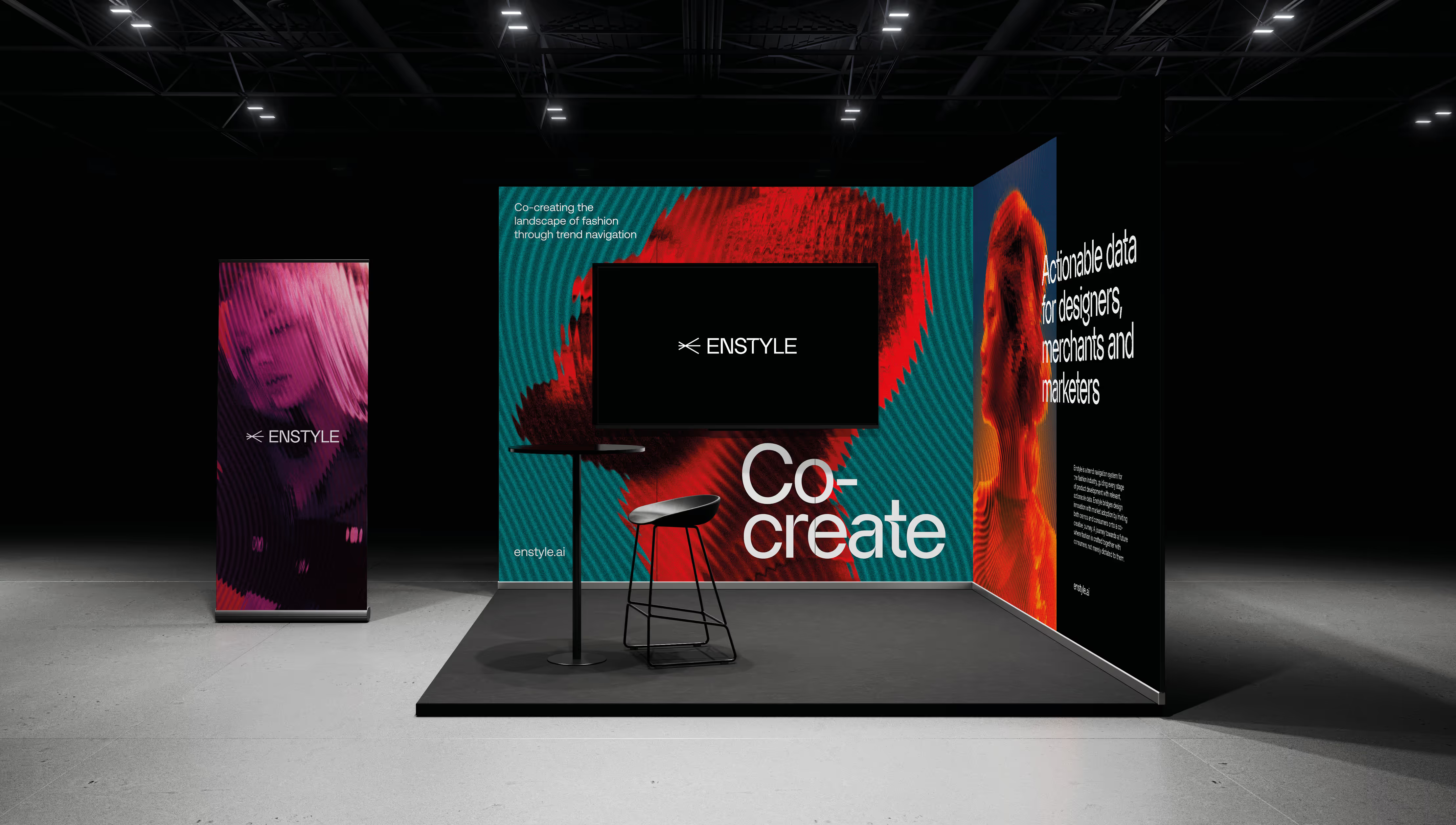
Enstyle data across inspiration, consumer, and market
Enstyle’s intelligence is built on public data and a constant read of how fashion is moving. AI agents follow global fashion media, runways, and cultural references to understand how ideas take shape and gain momentum. Consumer behaviour — from search patterns to social conversation — adds a clear signal of what is resonating in real time. This perspective is grounded in the market through ongoing analysis of hundreds of fashion brands, allowing adoption to be tracked and anticipated across competitors, aspirational labels, and niche players.















The traditional planning process, made more effective with Al
Enstyle approaches planning as a continuous flow rather than a series of handovers. Decisions are shaped by the full picture — what sold last season, which trends are building or fading, how consumers are responding, and how the market is evolving in general. Enstyle AI assistants work quietly in the background, learning as the line takes shape and helping teams explore better-balanced options at scale. They do not replace creative or commercial judgment, but add clarity and context before decisions are signed off, so each season builds on the last instead of starting over.
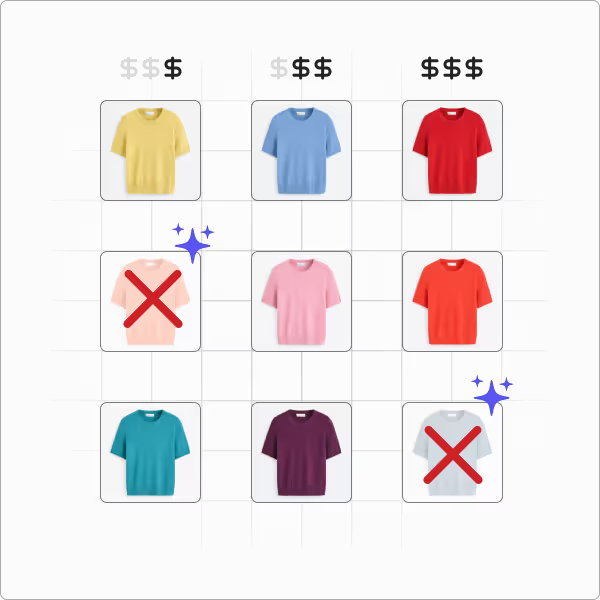
Analyse sales performance
AI reviews what was bought, priced, merchandised, and sold in detail to understand what truly drove performance. Demand issues are separated from product issues and execution effects such as timing, depth, or distribution. This gives teams a clear, shared view of last season, grounded in reality rather than assumption.
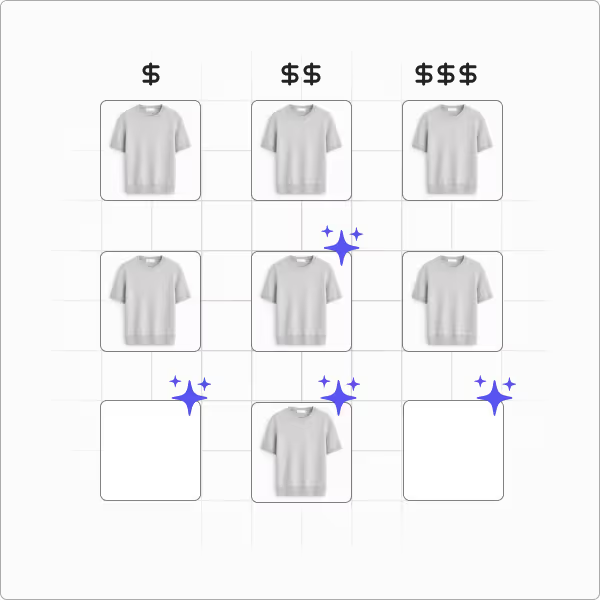
Spot gaps and upside
Using the learnings, AI agents quickly explore what an optimised version of the season could have looked like under real constraints. Structural gaps, missed demand, and imbalances in breadth, depth, and price are made visible without weeks of manual work, helping teams refine planning principles and buy rules for future collections.
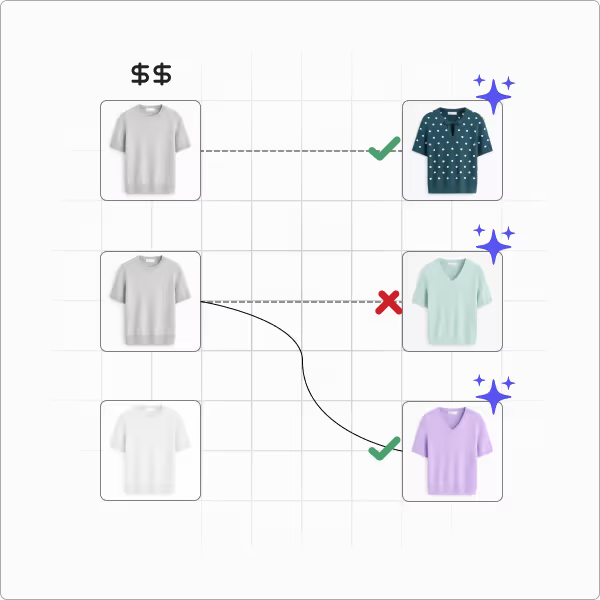
Build the next collection
AI supports line planning by exploring different demand scenarios and ranking product options by fashion relevance and desirability. Designers, merchants, and planners use this context to balance the line, make trade-offs, and decide what to commit to with full visibility into risk, opportunity, and impact.
meet aidrian and the team



+
Aidrian leads a team of intelligent agents trained to speak the language of fashion. They work across roles and seniority, understand context and tasks quickly, and support both visual and written work. From analysing runway imagery, collections, and competitive assortments to tracking social conversation and consumer signals, it helps teams move faster with clarity — whether shaping ideas, validating decisions, or answering complex questions in real time.
Gain a deeper understanding of consumer trends and how to act on them before finalising product decisions.
The impact comes from two simple shifts. First, brands gain clarity on which trends and signals are worth backing, helping them focus on the right ideas at the right time. Second, teams are warned early about decisions that add risk, such as overcommitting to trends that are weak, already peaking, or repeating last season's mistakes.



Trusted by many users
Used by fashion teams across design, merchandising and planning






Enstyle's core capabilities for fashion assortment planning
Enstyle researches and develops its capabilities in close connection with real fashion planning workflows. Our work is shaped by a combination of hands-on industry experience and deep expertise in fashion technology, allowing us to understand not only what to build, but why it matters to designers, merchandisers, and buyers. This perspective also defines how we use AI — grounded in what is technically possible today and focused on improving how planning decisions are made in practice.
Hindsighting
What it does
Reviews at last season as it actually played out, what was bought, priced, exposed, and sold, to see what worked and what did not.
Why it matters
Demand issues can be separated from product and execution effects, helping teams avoid misreading results and base future decisions on evidence rather than assumption.
Consumer insights
What it does
Follows consumer signals across search, social, and markets to understand what is resonating and how demand is shifting.
Why it matters
Design and planning decisions are grounded in real consumer demand rather than assumption, helping teams align collections with what people actually want.
Trend sensing
What it does
Tracks how trends have performed in the past and how they are developing now, across runways, media, culture, and consumers.
Why it matters
Fashion trend insight becomes a practical input for planning, supporting better timing, relevance, and alignment in the assortment line.
Competitive intelligence
What it does
Breaks down competitor assortments to show what others are offering, at what prices, and with which attributes across the market.
Why it matters
Teams gain a clearer view of where the brand is aligned, overexposed, or missing opportunity in the competitive landscape.
Scenario-based assortment
What it does
Allows teams to explore different versions of the line — adjusting option count, depth, and pricing — before committing to a final buy.
Why it matters
Assumption-led debates are reduced, late-stage changes become less frequent, and confidence in the final line improves.
Product and design ranking
What it does
Helps compare and prioritise product and design options based on how well they fit the line and how likely they are to perform.
Why it matters
Teams can focus attention on the options most likely to perform, while retaining full creative and commercial control.
Ideas, insight, and updates from inside Enstyle
A growing collection of articles, newsletters, Threads, Wraps, product updates, and case studies — focused on how collections are planned, decisions are tested, and lines improve over time. Made for designers and merchandisers who want clear thinking, not noise.